
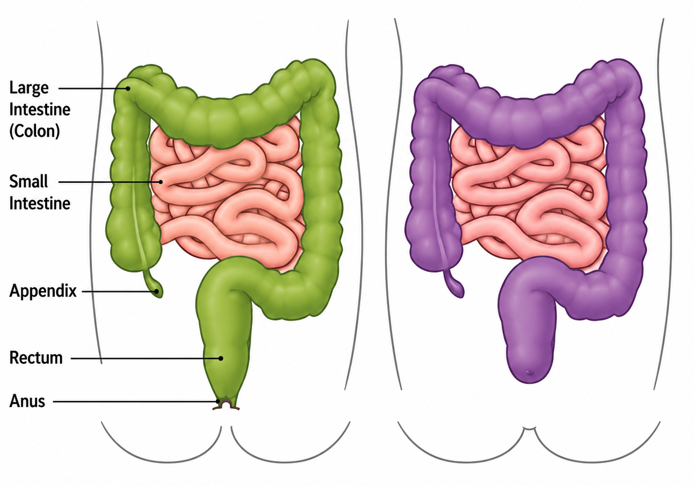
Imperforate anus is a birth defect where a newborn’s anus does not form properly. This condition affects a baby’s ability to pass stool. Early imperforate anus treatment in newborns is important for their health. Although rare, it is one of the most common newborn anorectal malformations. With the right care, most babies recover well. Families often have many questions about symptoms, causes, and treatment options. This guide explains what parents need to know.
What Is Imperforate Anus?
Imperforate anus means the opening to the baby’s bottom is missing or blocked. Sometimes, the anus is very narrow or connects to other parts inside the body. For example, it may connect to the urinary tract or vagina. This condition is part of a group called anorectal malformations. Pediatric colorectal care teams often treat these problems soon after birth.
Symptoms and Diagnosis in Newborns
Doctors usually notice imperforate anus soon after birth. However, some signs may be less obvious. Early diagnosis helps prevent problems. Common symptoms include:
Because these symptoms can be serious, doctors often use physical exams and imaging tests. For instance, an X-ray or ultrasound can show how the rectum is formed. Sometimes, more tests help find other related problems. Early detection leads to better outcomes for infants.
Causes and Risk Factors
Although the exact cause is not always known, imperforate anus develops during pregnancy. The baby’s lower digestive tract does not form correctly. Several factors may increase the risk:
In many cases, there is no clear reason. However, experts believe both genes and environment may play a role.
Treatment Options for Imperforate Anus in Newborns
Treatment depends on the type and severity of the imperforate anus. Usually, surgery is needed. Pediatric colorectal care teams work closely with families. Here are common treatment steps:
For mild cases, a single surgery may be enough. In more complex cases, several surgeries are done over time. Imperforate anus surgery in infants is safe when performed by experienced doctors. After surgery, babies often stay in the hospital for a few days. Recovery times vary, but most infants do well with proper care.
Post-Treatment Care and Follow-Up
After surgery, babies need special care to heal well. For example, parents may need to clean the surgical area and watch for signs of infection. Doctors may suggest gentle stretching exercises to help the new opening stay wide enough. Regular check-ups are important to monitor progress. Sometimes, babies need help with bowel movements as they grow. With ongoing pediatric colorectal care, most children develop good bowel control. However, some may need extra support or medicine.
Possible Complications and Prognosis
While most babies recover well, some may face challenges. Possible complications include:
Even so, advances in imperforate anus surgery in infants have improved outcomes. Most children lead healthy lives with the right care. Early treatment and regular follow-up help prevent serious problems.
Prevention and Parental Guidance
Currently, there is no sure way to prevent imperforate anus. Since most cases are not caused by anything parents did, guilt is not helpful. However, parents can take steps to support their baby’s health:
With support and guidance, families can help their child thrive. Many hospitals in large cities offer expert pediatric colorectal care for newborn anorectal malformations. Parents should ask questions and stay involved in their baby’s care plan.
Conclusion:
Imperforate anus is a congenital condition where the opening for passing stool is not formed normally. Early diagnosis after birth and timely surgical care can help restore bowel function and support the child’s healthy development.
Have concerns about your newborn’s bowel health or congenital conditions?
Consult Dr. Murali K for expert evaluation and specialised pediatric surgical care.