
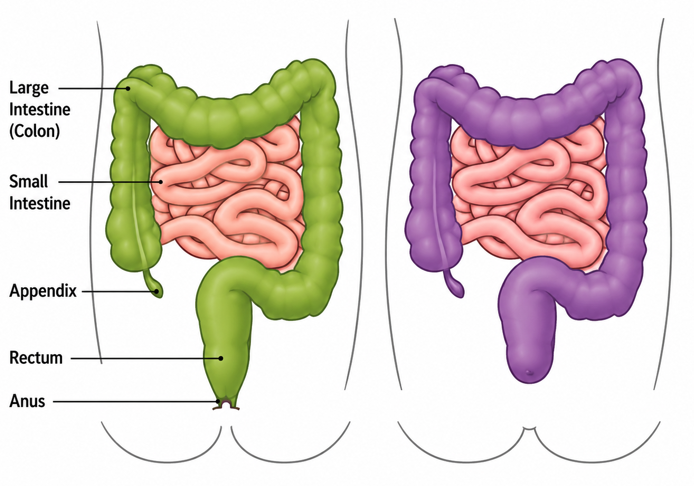
What is Imperforate Anus?
Imperforate anus is a birth defect. In this condition, a baby is born without a normal opening at the end of the digestive tract. Because of this, stool cannot pass out of the body as it should. Often, imperforate anus is found in newborns soon after birth. This problem is also called a congenital anorectal malformation. Although it is rare, it needs quick medical attention. Early treatment can help prevent serious health issues.
Causes and Risk Factors
Doctors do not know the exact cause of imperforate anus. However, it happens during early pregnancy when the baby’s lower digestive tract does not form properly. Some risk factors may increase the chance of this condition:
Sometimes, imperforate anus occurs with other congenital problems. For example, it may be seen with spinal or urinary tract issues. Still, most cases happen by chance and are not linked to anything parents did or did not do.
Common Symptoms and Signs
Usually, imperforate anus symptoms are clear soon after birth. For instance, doctors may notice:
Because these signs are easy to spot, doctors often diagnose imperforate anus in newborns quickly. Early detection helps prevent complications.
Diagnosis
Doctors use several steps to diagnose imperforate anus. First, they do a physical exam to check for an anal opening. Next, they may order tests to see how severe the problem is. These tests can include:
Sometimes, doctors also check for related problems in the heart, kidneys, or spine. This helps them plan the best treatment for each child.
Treatment Options
Treatment for imperforate anus depends on the type and severity. In most cases, surgery is needed. Here are some common imperforate anus treatment options:
Although surgery is the main treatment, doctors also give pain relief and support. In rare cases, mild forms may not need surgery. However, most children benefit from early treatment.
Living with Imperforate Anus
After treatment, children can often live healthy lives. Still, some may face challenges with bowel control. Because of this, regular follow-up visits are important. Parents can help their child by:
With the right care, most children adapt well. Early support and education can make a big difference.
Prevention and Prognosis
Currently, there is no sure way to prevent imperforate anus. Since it happens early in pregnancy, most cases cannot be avoided. However, regular prenatal care may help spot some birth defects early. The outlook for children with imperforate anus is often good, especially with prompt treatment. Most children grow and develop well. Still, some may need ongoing care for bowel function. With medical advances, long-term outcomes continue to improve.
Consult Dr. Murali .K for personalized advice on imperforate anus.